
SAP Business One stands as a robust solution designed to streamline business operations and drive growth through enhanced efficiency and data management. With its array of integrated tools and features, this platform offers businesses the ability to make informed decisions, automate tasks erp e-invoicing, and improve overall performance. From financial management to inventory control, SAP Business One provides a comprehensive suite of functionalities that cater to various aspects of business operations. As organizations seek to stay competitive in today’s fast-paced market, the role of SAP Business One in shaping their success becomes increasingly apparent.
Key Features of SAP Business One
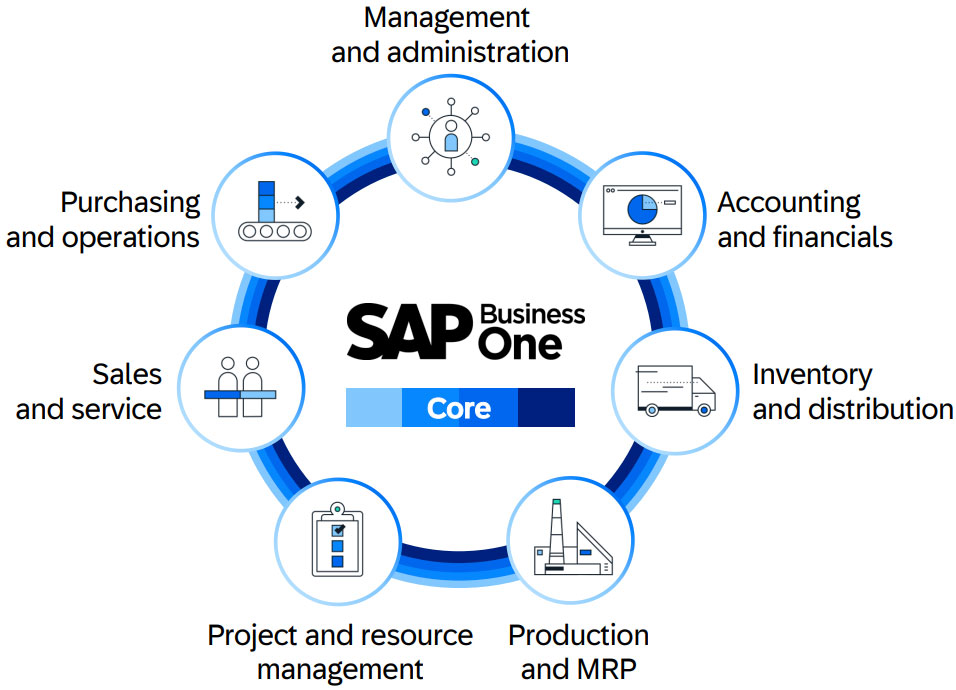
SAP Business One offers a comprehensive suite of key features designed to streamline and enhance business operations for small and medium-sized enterprises. One of the core features is its integrated system that centralizes data management, allowing for real-time access to information across various departments. This streamlines processes and enhances decision-making capabilities.
Additionally, SAP Business One provides robust financial management tools, including accounting, budgeting, and financial reporting functionalities. These features ensure accurate financial data tracking and analysis, aiding in better financial planning and control.
Furthermore, the software includes customer relationship management (CRM) tools that help businesses manage interactions with customers effectively https://aspert.com.my/e-invoice/. This feature enables companies to track leads, manage sales opportunities, and provide better customer service.
Moreover, SAP Business One offers inventory management features, allowing businesses to optimize stock levels, track inventory movements, and improve order fulfillment processes. Overall, these key features of SAP Business One work cohesively to drive efficiency, productivity, and growth for small and medium-sized enterprises.
Benefits of Implementing SAP Business One
Implementing SAP Business One offers businesses the potential for improved efficiency through seamless integration of various functions.
With enhanced data visibility, organizations can make informed decisions quickly and effectively.
Streamlining business processes is another key advantage, leading to increased productivity and cost savings.
Improved Efficiency Through Integration
Enhanced operational streamline and cohesion are evident outcomes of integrating SAP Business One, leading to improved efficiency in business processes. By integrating various functions such as finance, sales, and inventory management into a unified system, SAP Business One eliminates silos and enhances communication across departments.
This integration reduces manual data entry, minimizes errors, and enables real-time access to critical information. The automation of repetitive tasks frees up employees to focus on value-added activities, ultimately boosting productivity. Moreover, the seamless flow of data between different modules facilitates better decision-making and faster response times to customer needs.
In essence, the integration offered by SAP Business One paves the way for smoother operations and increased efficiency within organizations.
Enhanced Data Visibility
With the integration of SAP Business One, organizations experience a notable enhancement in the accessibility and clarity of their data, leading to improved decision-making processes. By consolidating data from various departments into a single unified platform, SAP Business One provides real-time insights and comprehensive visibility into key metrics such as sales, inventory levels, and financial performance.
This enhanced data visibility enables stakeholders to quickly identify trends, pinpoint areas for improvement, and make informed decisions promptly. Moreover, the ability to generate customizable reports and dashboards further empowers users to analyze information efficiently, facilitating strategic planning and operational efficiency.
Streamlined Business Processes
The implementation of SAP Business One not only enhances data visibility but also leads to the streamlining of business processes, resulting in a more efficient and organized operational framework. By integrating various functions such as accounting, sales, CRM, and inventory management into a single system, SAP Business One simplifies workflows, reduces manual tasks, and eliminates silos between departments.
This streamlining of processes enables businesses to operate more smoothly, make informed decisions faster, and respond promptly to market changes. Furthermore, the automation of repetitive tasks enhances productivity, minimizes errors, and frees up employees to focus on strategic activities that drive growth. Ultimately, the streamlined business processes facilitated by SAP Business One contribute to increased operational agility and improved overall performance.
How SAP Business One Enhances Efficiency
Implementing SAP Business One streamlines operations and boosts productivity by integrating key business processes into a unified system. This integration eliminates silos between departments, allowing for seamless flow of information and real-time data accessibility. By automating tasks such as financial management, sales, customer relationship management, inventory, and reporting, SAP Business One reduces manual errors and duplication of efforts, thus enhancing overall efficiency.
Moreover, the system provides a centralized platform for monitoring performance metrics, enabling quick decision-making based on accurate data analysis. With features like customizable dashboards and reporting tools, users can gain valuable insights into various aspects of the business, leading to improved operational efficiency. Additionally, the scalability of SAP Business One ensures that as the business grows, the system can easily adapt to increasing demands without compromising performance.
Integrating SAP Business One Across Departments
How can the seamless integration of SAP Business One across departments optimize organizational processes and enhance overall efficiency?
Integrating SAP Business One across departments can streamline operations by ensuring that data flows smoothly between different functions within an organization. By connecting departments such as sales, finance, inventory management, and customer service through a unified system, businesses can eliminate silos and improve collaboration. This integration allows for real-time access to critical information, enabling quicker decision-making and a more agile response to changing market conditions.
Moreover, integrating SAP Business One across departments facilitates a more holistic view of the organization’s performance, as data from various sources can be consolidated and analyzed comprehensively. This integrated approach not only enhances operational efficiency but also enables better strategic planning and resource allocation. Through the seamless sharing of information, businesses can identify trends, anticipate customer needs, and optimize processes to drive growth and profitability.
Ultimately, integrating SAP Business One across departments is essential for organizations seeking to achieve greater agility, productivity, and competitiveness in today’s dynamic business landscape.

Customization Options in SAP Business One
Connecting the functionality of SAP Business One across various departments can encourage businesses to explore the diverse customization options available within the system. Customization in SAP Business One allows organizations to tailor the software to their specific needs, enhancing efficiency and productivity. One key customization feature is the ability to create personalized dashboards that display crucial business information in a format that suits individual preferences.
Additionally, users can customize reports to analyze data relevant to their roles, enabling informed decision-making. SAP Business One also offers the flexibility to customize workflows, ensuring processes align with company procedures and requirements. Furthermore, the system supports the integration of third-party applications, expanding its capabilities to meet unique business demands.
Implementing SAP Business One: Step-by-Step Guide
To implement SAP Business One successfully, it is crucial to adhere to a Setup Requirements Checklist. This checklist outlines the essential prerequisites for a smooth installation process.
Additionally, a comprehensive User Training Plan should be devised to ensure that all employees are equipped to effectively utilize the system.
Lastly, a well-thought-out Data Migration Strategy is essential for transferring existing data seamlessly into SAP Business One.
Setup Requirements Checklist
Setting up SAP Business One requires strict adherence to a comprehensive checklist of requirements essential for a successful implementation process. The setup requirements checklist includes items such as hardware specifications, operating system compatibility, database setup, network configuration, and security measures.
Hardware requirements typically involve servers, workstations, and mobile devices with specific RAM and storage capacities. Operating system compatibility ensures that SAP Business One can run smoothly on the chosen platform. Database setup entails choosing a supported database management system and configuring it to meet the software’s needs.
Network configuration involves setting up network connections to enable seamless data exchange. Security measures include user access controls, data encryption, and regular backups to safeguard critical information. Adhering to this checklist is crucial for a smooth SAP Business One implementation.
User Training Plan
Developing a comprehensive user training plan is a critical component of the step-by-step guide for successful implementation of SAP Business One. The user training plan should be tailored to the specific needs of the organization, taking into account the existing knowledge base of the users and the complexity of the SAP Business One system.
It is essential to identify key users who will act as trainers or super-users within each department to facilitate knowledge transfer. Training sessions should cover not only the technical aspects of using the system but also the business processes that will be supported by SAP Business One.
Regular feedback loops and assessments should be built into the training plan to ensure that users are effectively acquiring the necessary skills and knowledge for efficient system utilization.
Data Migration Strategy
The formulation and execution of an effective data migration strategy is a pivotal stage in the systematic implementation of SAP Business One. A well-thought-out data migration plan ensures a smooth transition of crucial information from existing systems to SAP Business One, minimizing disruptions and data loss.
The strategy should involve identifying key data sets, cleaning and validating data, mapping data fields, and establishing protocols for data extraction and loading. It is essential to engage stakeholders from different departments to gather insights into data requirements and ensure a comprehensive migration process.
Regular testing and validation are integral to guaranteeing the accuracy and integrity of migrated data. A robust data migration strategy lays a solid foundation for the successful adoption of SAP Business One.
Success Stories: Businesses Thriving With SAP Business One
Businesses across various industries have found significant success and growth by implementing SAP Business One as their comprehensive ERP solution. One such success story is that of Company X, a manufacturing firm that saw a 30% increase in productivity and a 20% reduction in operating costs after integrating SAP Business One into their operations. This allowed them to streamline their processes, improve inventory management, and enhance decision-making capabilities.
Additionally, Company Y, a retail business, experienced a 25% growth in sales within the first year of utilizing SAP Business One. The system’s ability to provide real-time insights into customer preferences and inventory levels enabled Company Y to optimize their product offerings and enhance customer satisfaction.
Furthermore, Company Z, a professional services firm, reported a 40% increase in project efficiency and a 15% reduction in billing errors post SAP Business One implementation. This led to improved client satisfaction and higher profitability for the company. Overall, these success stories showcase the transformative impact SAP Business One can have on businesses, irrespective of their industry.
Conclusion
In conclusion, SAP Business One offers a comprehensive business management solution that drives efficiency, productivity, and growth by integrating tools for centralized data management, financial management, customer relationship management, and inventory management.
With features like automation, real-time insights, and customizable reports, businesses can make informed decisions, reduce manual tasks, and improve overall performance.
Implementing SAP Business One can lead to streamlined operations and enhanced decision-making capabilities, ultimately driving success.